
The Role of श्रुति (Shruti) and स्मृति (Smriti) in preserving Yogic Wisdom & The Three Stages of Enlightenment in अद्वैत वेदान्त (Advaita Vedanta)
Kevala Yoga Wellness | SEP 3, 2024
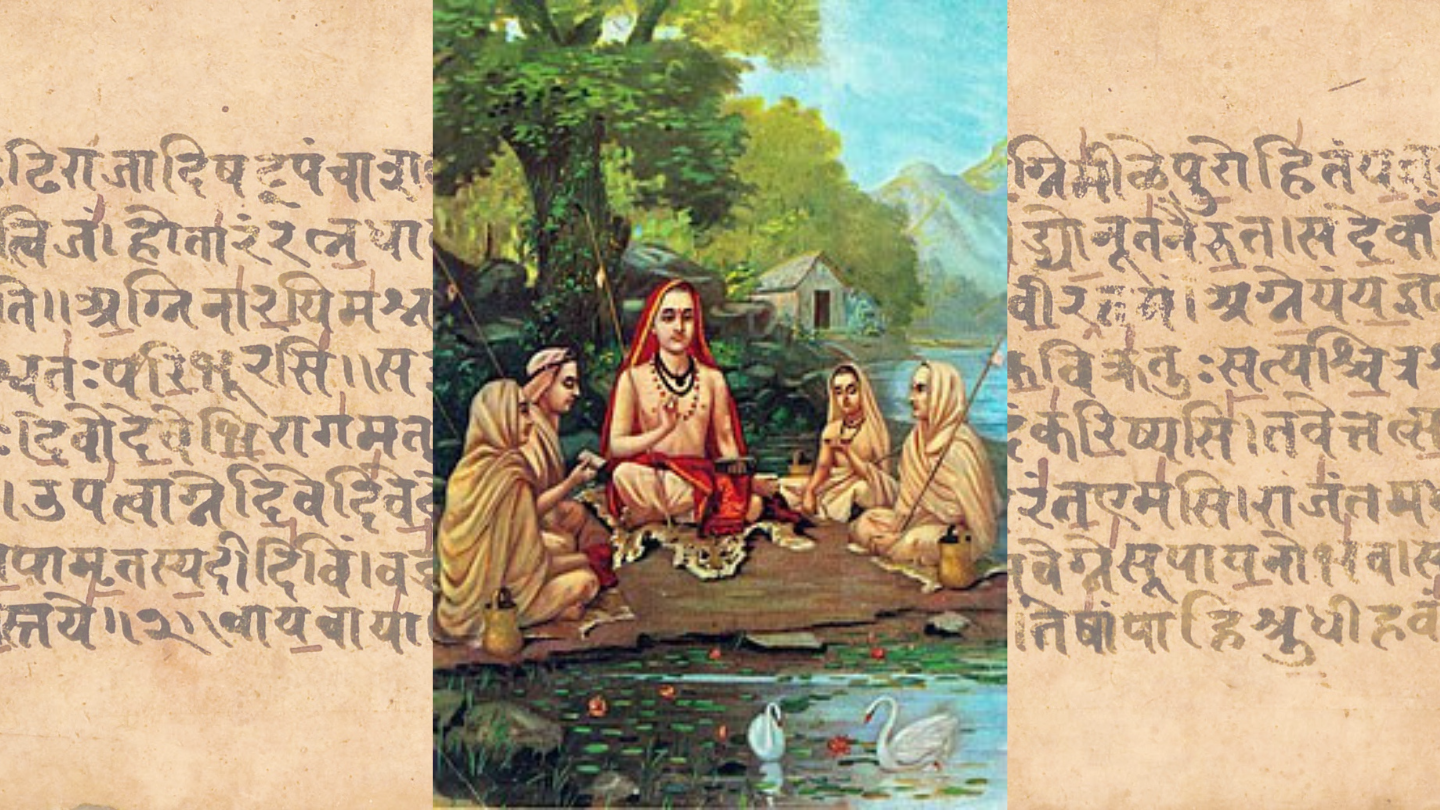
Yoga is not merely a practice confined to the mat; it is an ancient, comprehensive knowledge that encompasses the entire science of interconnected energies and vibrations both within and around us. In essence, yoga is a way of living that leads an individual towards self-realization, ultimately uniting individual consciousness with the supreme consciousness.
While yoga can seem complex and vast without proper guidance, it becomes the simplest and most direct path to self-realization under the guidance of a guru. This tradition of learning from a guru, known as Guru Parampara, is the most ancient tradition in Yoga, where the guru becomes a guiding light, illuminating the path with the right direction and profound understanding, making the journey toward union with the ultimate reality more accessible and clear.
The tradition of Guru Parampara has established the foundation for the profound knowledge and wisdom of Yoga that continues to guide our practice and learning today. The Rishis and Gurus not only preserved this profound wisdom but also meticulously compiled it into structured scriptures. These texts are not simply manuals on posture, breathwork, and chakras; they offer a systematic study of our existence and energy, as well as the broader realm of existence, energy, and vibrations beyond ourselves.
Before the existence of written literature, the knowledge of yoga was passed down through generations of Rishis and Gurus via the oral traditions of श्रुति (Shruti), meaning "that which is heard," and स्मृति (Smriti), meaning "that which is remembered." This method of transmission preserved the essence of yoga, ensuring its continuity long before it was ever documented in texts.
As written literature emerged, many ancient teachings began to be documented as detailed and structured Yogic knowledge. This vast body of ancient and Yogic literature is derived from the Vedas, which serve as the foundation of all knowledge. The term वेद (Veda) in Sanskrit means "Knowledge." This comprehensive knowledge is compiled and classified into four types: The Rigveda, The Yajurveda, The Samaveda, and The Atharvaveda.
In this blog, we will throw light on a teaching from a revered Yogic Scripture called अद्वैत वेदान्त (Advaita Vedanta). The term "Advaita" simply means "no two" or "non-dual," and "Vedanta" means "the conclusion of the Vedas." This scripture encompasses the teachings of the revered Vedic Scholar, Yogi, and Guru, Adi Shankaracharya. The word "Adi" means "first," and "Shankaracharya" is composed of two parts: "Shankara" and "Acharya." "Acharya" is a Sanskrit word meaning "teacher," so Shankaracharya means "teacher of the way of Shankara (Shiva or Adi Yogi)."
The core principle of this text is that there is only one reality, Brahman, the supreme consciousness that transcends all distinctions and dualities. The apparent diversity and multiplicity of the world are seen as illusions (Maya), as everything - whether it be energy, matter, or forms, ultimately originates from and merges back into this ultimate reality, the source of all creation. According to this scripture, the true self or soul of an individual, known as आत्मन् (Atman) in Sanskrit, is identical to Brahman (Supreme Consciousness or Ultimate Reality). Realizing this oneness is the key to liberation (Moksha).
To understand this concept better, let's explore a meditation technique from one of the most ancient scriptures on meditation, the "Vigyan Bhairav Tantra." In this technique, we use the analogy of the ocean and its waves to explore the relationship between Individual Consciousness and Supreme Consciousness. Just as waves are nothing but the ocean itself rising and falling, our individual consciousness is a manifestation of the supreme consciousness. Waves cannot exist without the ocean, but the ocean can exist without waves. In essence, only the ocean truly exists; the wave is merely a form, not the substance.
In Advaita Vedanta, one key teaching emphasizes three vital practices or stages for attaining the highest spiritual enlightenment: Shravana (श्रवण), Manana (मनन), and Nididhyasana (निदिध्यासन). These stages represent a transformative spiritual journey, guiding the seeker from understanding the truth with the mind to experiencing it directly with the soul.
Shravana (Listening):
Shravana is the first step in the spiritual journey, where the seeker listens with complete devotion and surrender to the teachings of the Yogic Scriptures (Vedas, Upanishads, Yoga Sutras, etc.) under the guidance of a Rishi, Yogi, or Guru. Due to the vastness of these sacred texts, the Guru imparts knowledge and wisdom in a structured and organized way. This stage goes beyond simply hearing words; it involves absorbing the divine vibrations and essence of the teachings. Through Shravana, the seeker tunes into the subtle truths of existence, realizing that the Self (Atman or Soul) is inseparable from the ultimate reality (Brahman).
Manana (Reflection):
Manana is the inner dialogue of the soul, where the teachings received in Shravana are contemplated deeply. It is the process of churning the wisdom within, allowing doubts and confusions to dissolve in the light of introspection. Here, the seeker reflects on the oneness of the Self and the universe, letting this realization permeate every layer of consciousness. Through reflection, the mind transforms into a clear vessel, ready to hold the truth.
Nididhyasana (Meditation):
Nididhyasana is the culmination of the spiritual journey - a state of deep, continuous meditation. This is where knowledge transcends the intellect and becomes lived experience. In Nididhyasana, the seeker immerses in the truth, merging with the essence of non-duality. It is the silent, unwavering meditation on the Self, where the illusion of separateness fades, and only the pure awareness of oneness remains. Through this meditative absorption, the seeker attains the highest realization, embodying the eternal truth in every breath and moment.
The three stages of Shravana (listening), Manana (contemplating), and Nididhyasana (applying and experiencing) cannot be simply classified as easy or difficult. Their effectiveness depends entirely on the seeker's intention and the depth of devotion and surrender to the Guru and the wisdom imparted. Each stage is equally vital and interconnected; spiritual enlightenment cannot be attained through listening and contemplating alone, as without dedicated application and experience of the learned wisdom, the knowledge remains incomplete. Additionally, listening to the Guru's teachings without true devotion and focus impedes the ability to fully contemplate and absorb the wisdom. Without thorough contemplation and introspection, doubts will persist, and clarity will remain elusive.
To conclude, in today's fast-paced world, especially in urban environments, modern living often distances us from our natural state. The pursuit of contentment and feeling grounded is no longer a simple task, as regulating our thoughts and emotions has become increasingly difficult. For some, Yoga is a means to maintain physical health; for others, it is a path to modulate the mind and thoughts; and for some, it encompasses both. Each individual’s journey with yoga is unique, exploring various aspects of the practice.
Yoga, in its traditional essence, transcends being just a part of life; it becomes life itself, where every moment is infused with Yogic wisdom. This continuous journey guides you to modulate the mind and regulate the thoughts that are more numerous than the blades of grass on Earth, helping you rise above material concerns and merge with the Supreme Consciousness or Ultimate Reality.
Kevala Yoga Wellness | SEP 3, 2024
Share this blog post